 Regulatory Notices
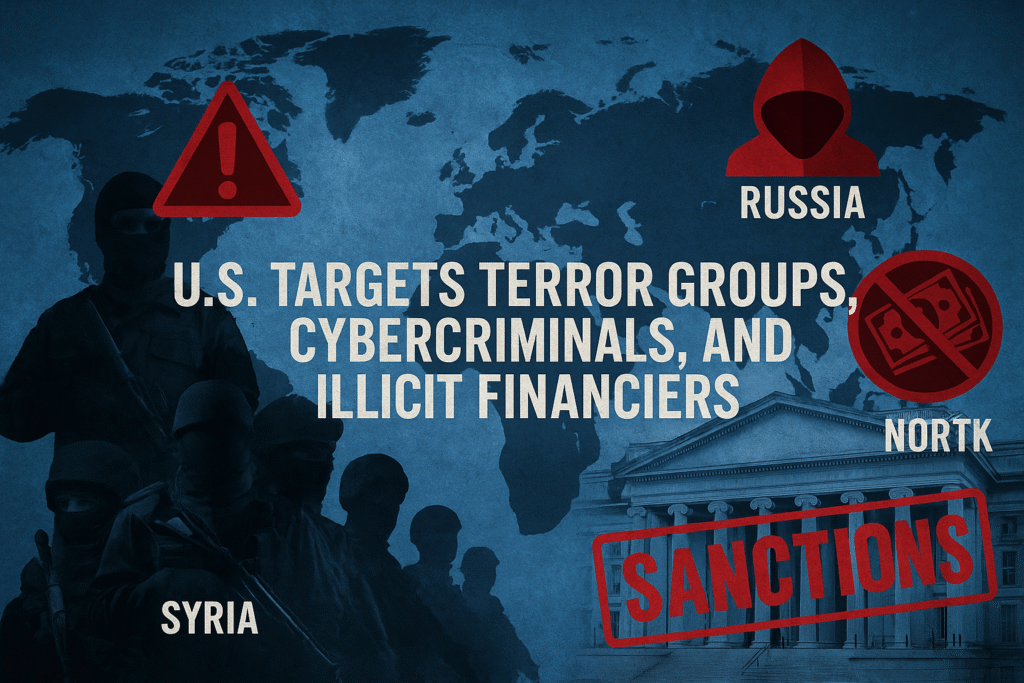
U.S. Targets Terror Groups, Cybercriminals, and Illicit Financiers
In July 2025, the U.S. Department of the Treasury’s Office of Foreign Assets Control (OFAC) unveiled key sanctions aimed at disrupting global networks tied to terrorism financing, cybercrime, and covert financial operations. These measures spotlight three high-profile designations:
1. Hayʽat Tahrir al-Sham (HTS) — Syrian Terror Network
- Designation Date: July 8, 2025
- Action Taken: Designated a Specially Designated Global Terrorist (SDGT)
- Why it matters: HTS was implicated in orchestrating violent attacks on both civilians and government forces, recruiting foreign fighters, and sourcing funds via illicit means—keeping its extremist operations afloat in Syria.
This action coincided with broader changes to the Syria sanctions program, which as of July 1, largely lifted economic sanctions—while preserving targeted tools to address terrorism and human rights threats.
2. Mohammed Suleiman BADIR — Iranian Financial Operative
- DOB: October 15, 1975 |
- Designation Date: July 3, 2025
- Nationality: Iran
- Reason: BADIR oversaw a complex web of front companies across Asia and the Middle East that channeled funds to the IRGC-Quds Force (a U.S.-designated terrorist organization), using layered financial architectures to obscure financial trails.
This builds upon earlier steps—like OFAC’s June 6 wave of sanctions against entities enabling the IRGC-QF—keeping consistent pressure on Iran’s financial apparatus.
3. Yurii Meruzhanovich Bozoyan — Russian Cyber Facilitator
- DOB: January 30, 1992 |
- Designation Date: July 1, 2025
- Nationality: Russia
- Reason: Bozoyan led cyber operations supporting North Korea–linked ransomware units, targeting European and Asian financial institutions—a worrying blend of state-sponsored cybercrime and ransomware proliferation.
Why These Sanctions Matter
| Objective | Details |
|---|---|
| Combat Terrorism | By designating HTS, OFAC disrupts extremist financing and recruitment in Syria. |
| Counter Illicit Finance | Sanctioning BADIR aims to dismantle opaque financial conduits feeding IRGC-QF operations. |
| Defend Cybersecurity | Targeting Bozoyan signals the U.S. commitment to holding accountable those who facilitate cyberattacks. |
Key Takeaway
In mid-2025, OFAC demonstrated a multi-faceted sanctions strategy targeting:
As Syria’s broad sanctions were eased in July—via Executive Orders and General License 25—OFAC signaled that specialized tools to target terrorists and other malicious actors remain active.Key TakeawayIn mid-2025, OFAC demonstrated a multi-faceted sanctions strategy targeting:
- State & Non-State Terrorists (HTS),
- Illicit Financial Enablers (BADIR),
- Cybercrime Facilitators (Bozoyan).
This calibrated approach exemplifies U.S. resolve to leverage targeted financial sanctions as tools for promoting global security and financial transparency.
Sources & Further Reading:
- OFAC press release on HTS SDGT designation Steptoe+6Covington+6JINSA+6
- OFAC General License 25 guidance on Syria’s sanctions framework Arnold & Porter+9OFAC+9JINSA+9
- Steptoe overview of recent Iran-related sanctions waves Steptoe