Risk Watch
Weekly
Edition
9 Nov
2026
SafetyNet Weekly Compliance Brief · Caribbean AML & Compliance Intelligence
Cover feature
FCA Enforcement Action Against Disguised Remuneration Loan Collections
This week’s regulatory landscape is dominated by FCA consumer protection actions, including enforcement against disguised remuneration schemes and renewed emphasis on fair and transparent consumer contracts.
- High priority
- Medium priority
- Regional view
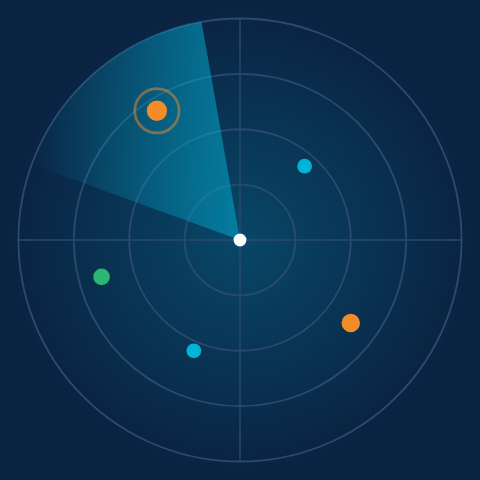
This week’s signals : This week the FCA moved against disguised remuneration loan collections by Ethica Resolve, while US Treasury cut MEXC Global off from the US banking system.
High · Sanctions
MEXC Global
High · FCA UK
Sham Loans
FCA Enforcement Action Against Disguised Remuneration Scheme Loan Collections
Red flags of the week
Official Cover
Identity Fraud & Sanctions Evasion Through Political/Official Channel Abuse
Caribbean regulatory watch
Caribbean Regulatory Watch
This week’s regulatory landscape is dominated by FCA consumer protection actions, including enforcement against disguised remuneration schemes and renewed emphasis on fair and transparent consumer contracts. While these updates originate from UK/European regulators, Caribbean institutions with correspondent banking relationships, cross-border lending operations, or FCA-regulated subsidiaries face indirect compliance obligations and reputational risk considerations.
This week’s items by priority
FCA Enforcement Action Against Disguised Remuneration Scheme Loan Collections
High
FCA Mandates Fair and Transparent Consumer Contract Terms
Medium
FCA Launches Retrospective Rules Review to Modernize Regulatory Framework
Low
FCA UK · High
FCA Enforcement Action Against Disguised Remuneration Scheme Loan Collections
Deadline: Immediate awareness required. Enhanced due diligence procedures and typologies updates should be implemented within 30–45 days.
The FCA intervened against Ethica Resolve Limited, an authorised debt servicer, after it demanded repayment of loans issued as part of disguised remuneration schemes — a form of tax avoidance arrangement where remuneration is routed through loans that are never intended to be repaid. The FCA has imposed restrictions on Ethica’s collection activities, signaling aggressive regulatory scrutiny of secondary-market purchasers of these loan books (in this case, West 28th Street Limited). This highlights growing concern over AML risks embedded in disguised financial structures.
Disguised remuneration
Pay routed through loans never intended to be repaid
Loan book purchased
West 28th Street Limited. Any onward sale or servicing transfer of a disguised remuneration loan book should be treated as a trigger for review.
Repayment demanded
Ethica Resolve Limited, authorised debt servicer
FCA intervenes
Restrictions on Ethica’s collection activities
Action required
Caribbean compliance teams should:
- Screen existing and prospective correspondent banking relationships and loan portfolio acquisitions for exposure to disguised remuneration schemes or similar tax-avoidance structures;
- Enhance due diligence on debt purchasers and third-party loan servicers to identify red flags associated with sham loan arrangements;
- Update typologies libraries and SAR/STR filing guidance to include disguised remuneration loan structures as a recognized financial crime typology;
- Brief frontline AML staff on this emerging enforcement pattern.
- Identify any customers, debt buyers or servicers linked to disguised remuneration loan portfolios and record the outcome on file.
Regional view
Although this week’s updates are sourced from UK regulators, Caribbean financial institutions cannot treat them as geographically remote. The region’s deep correspondent banking dependencies on UK-regulated institutions mean that FCA enforcement actions — particularly those involving disguised financial structures and consumer harm — directly influence the risk appetite of correspondent partners assessing Caribbean institution relationships. Jurisdictions such as the Cayman Islands, BVI, Bermuda, Barbados, and Trinidad & Tobago have significant UK financial and regulatory linkages, and FCA consumer protection and AML enforcement trends are increasingly mirrored in CFATF peer review expectations and Caribbean regional supervisory guidance. Institutions in these jurisdictions with UK-linked lending or debt-servicing activity carry the most direct disguised remuneration exposure.
Feature · FCA UK
Feature
FCA Mandates Fair and Transparent Consumer Contract Terms
Medium
FCA UK
The FCA has reaffirmed and intensified its expectations that all financial firms ensure consumer contracts — including those for loans, insurance, and crypto wallets — comply fully with fairness and transparency requirements under the Consumer Duty framework. Firms must eliminate fine print that obscures material terms or creates unfair contractual obligations for retail customers.
Deadline
Ongoing — Consumer Duty has been in force since July 2023; FCA enforcement posture is actively escalating as of Q4 2026. Internal contract reviews should be completed within 60 days.
Action required
- Caribbean institutions operating under FCA jurisdiction, or those with UK-facing products/services, should audit all consumer-facing contracts for compliance with Consumer Duty fairness and transparency standards;
- Locally, institutions should use this as a benchmark to review their own contract terms under applicable Caribbean consumer protection legislation (e.g., Trinidad & Tobago’s Consumer Protection and Safety Act, Jamaica’s Consumer Protection Act);
- Compliance teams should flag any terms that could be deemed exploitative or unclear to retail customers.
FCA Launches Retrospective Rules Review to Modernize Regulatory Framework
Low
FCA UK
The FCA has initiated a structured retrospective review of its existing rulebook, acknowledging that some regulations may be outdated, overly burdensome, or misaligned with current market realities including technological innovation. The review is intended to simplify compliance obligations where appropriate while strengthening rules in areas of emerging risk. This signals a potential recalibration of the UK regulatory perimeter that could affect how Caribbean institutions structure their UK-linked operations.
Deadline
Monitoring phase — no immediate action deadline. Assign a regulatory tracking responsibility within 14 days; review FCA consultation outputs on a rolling quarterly basis.
Action required
Caribbean institutions with UK operations, FCA-regulated affiliates, or products distributed in the UK should:
- Monitor FCA consultation papers and rule change announcements emerging from this review;
- Have compliance and legal teams participate in relevant consultations and assess how any rule simplifications or new requirements may alter compliance obligations.
Locally, regional regulators (CARICOM, OECS) may cite FCA reform directions as reference points in their own regulatory modernization efforts.
Regional view
The rise of crypto wallet regulation and disguised remuneration typologies are especially pertinent for Caribbean IFCs (International Financial Centres) where trust structures, offshore lending arrangements, and digital asset services intersect — areas already under heightened FATF scrutiny during the current mutual evaluation cycle for several Caribbean nations.
Global sanctions delta
Global Sanctions Delta
This week’s sanctions activity centered on three critical areas:
US Treasury & FinCEN
MEXC Global
Action against MEXC Global crypto exchange, severing its access to the US banking system over $16 billion in alleged illicit transactions;
OFAC
Canadian MSBs
OFAC sanctions against eight Canadian money services businesses facilitating Iranian regime sanctions evasion;
Iran
Oil Facilities
Iran’s continued sanctions circumvention through acquisition of Chinese oil facilities.
These developments carry direct implications for Caribbean correspondent banking relationships, crypto asset custody, and third-country money services compliance.
| Entity | Type | Jurisdiction | Risk |
|---|---|---|---|
| MEXC Global | Entity | Crypto Exchange (jurisdiction unclear from reports) | High |
| Eight Canadian Money Services Businesses (MSBs) | Entity | Canada | High |
| Prince Group | Entity | Unknown (41 companies sanctioned) | Medium |
Caribbean Alert
- MEXC Global Cutoff: All Caribbean financial institutions should immediately cease processing any payment instructions involving MEXC Global or its subsidiaries. Review customer accounts for MEXC trading activity and notify customers that USD/fiat settlement through US correspondent banks is no longer possible. This affects digital asset custody, crypto exchange services, and fintech operations across the region.
- Canadian MSB Restrictions: Caribbean remittance operators, money transfer services, and trade finance entities should urgently audit their Canadian correspondent relationships. Request updated OFAC compliance certifications from all Canadian MSBs in their payment chains. Watch for any Iranian-linked transaction patterns.
- Enhanced Iran Scrutiny: Given reports of Iran acquiring Chinese oil facilities to bypass sanctions, Caribbean financial institutions should apply heightened screening for: (a) trade finance transactions involving petroleum products with Chinese or UAE intermediaries; (b) customers with Iranian ownership or beneficial interests; (c) sanctions evasion schemes using Caribbean Special Economic Zones or free trade zones.
- Crypto Compliance Escalation: Review all cryptocurrency-related customer relationships and trading platform custody. The MEXC enforcement signals heightened FinCEN attention to illicit crypto flows; Caribbean institutions offering crypto services should review how they detect sanctions evasion patterns in crypto activity.
Red flags of the week
Identity Fraud & Sanctions Evasion Through Political/Official Channel Abuse
How the pattern works:
- Sanctioned individuals establish formal business relationships with government officials and entities
- Political legitimacy and official agreements obscure illicit beneficial ownership
- Sanctions screening is evaded and assets are moved
- Accomplices obtain fraudulent identification documents through document manipulation networks
- Official government endorsements are used to bypass compliance checks
Formal government agreements with US-sanctioned individuals despite international warnings
Indicates deliberate circumvention of sanctions regimes; government endorsement creates false legitimacy for financial transactions and obscures true beneficial ownership
High
Caribbean nationals arrested for illegal voting/identity fraud in US jurisdiction
Document fraud networks operating across US-Caribbean nexus; same organized groups likely producing fraudulent corporate IDs, beneficial ownership documents, and nominee structures
High
Beneficial ownership compliance deadline approaching with active promotional ‘clinics’
Indicates significant non-compliance; creates urgency for fraudulent last-minute filings; high volume of rushed registrations bypass substantive verification
Medium
Oil-driven economic boom with US$43.5B in assets in vulnerable coastal zones
Rapid wealth creation attracts money laundering; environmental vulnerability creates urgency narratives for rapid asset movement; infrastructure projects vulnerable to PEP corruption
Medium
Political opposition demands disclosure of sanctioned entity agreements
Signals institutional AML controls have failed; suggests multiple transactions already processed with sanctioned parties; indicates potential typology replication across government-linked entities
High
Gaps between international sanctions warnings and actual enforcement actions
Demonstrates window for illicit actors to establish banking relationships before full sanctions designation; creates regulatory uncertainty for financial institutions
Medium
This week’s checklist
Screening Tips & This Week Checklist
Screening Tips
- Screen ALL counterparties against consolidated US, UK, EU, UN and CARICOM sanctions lists REGARDLESS of government official involvement or domestic regulatory approval
- Implement secondary beneficial ownership verification for entities with government contracts/agreements — require independent documentary evidence beyond official registrations
- Flag transactions involving Caribbean nationals with US-jurisdiction arrest records for document/identity fraud; cross-reference with company signatories and beneficial owners in your CRM
- Review beneficial ownership filings submitted near regulatory deadlines for incomplete/inconsistent information; prioritize verification for rush filings
- Establish sanctions evasion detection rules: (1) Sanctioned individual + government contract/approval = HIGH RISK; (2) Government endorsement + offshore beneficial owner + rapid asset movement = investigate nexus
- Conduct enhanced due diligence on all entities involved in oil/energy sector, infrastructure development, and government procurement — highest corruption/PEP exposure in resource-boom economies
- Flag any counterparty that acquires or services disguised remuneration loan books for enhanced due diligence.
This Week Checklist
This week’s compliance focus:
- Manually re-screen all active counterparties with government contracts/endorsements against sanctions lists regardless of internal approval status
- Audit beneficial ownership filings from past 30 days for document integrity and consistency — prioritize entities using nominee structures or with political connections
- Cross-reference internal customer lists with Caribbean nationals flagged in US identity fraud/voting cases
- Implement rule: No transaction can proceed where government official approval substitutes for independent beneficial ownership verification
- Escalate all energy-sector transactions involving political connections to senior compliance review
- Document and escalate for SAR consideration all instances where international sanctions warnings preceded domestic regulatory action, indicating evasion window exploitation
Get this brief every Monday — free
Join Caribbean compliance professionals receiving actionable AML & sanctions intelligence every week — completely free.
Risk Watch is general information for compliance teams, not legal advice. Requirements vary by sector and jurisdiction. For specific regulatory guidance, please consult with a qualified legal professional.
Published by SafetyNet, developed by Domus Semo Sancus, Providenciales, Turks and Caicos Islands.